Recipes
Homemade Pumpkin Puree
One pumpkin, no tin, and no burnt edges. The trick is sealing it in a foil parcel, which stops a gas oven scorching it before the flesh is soft.
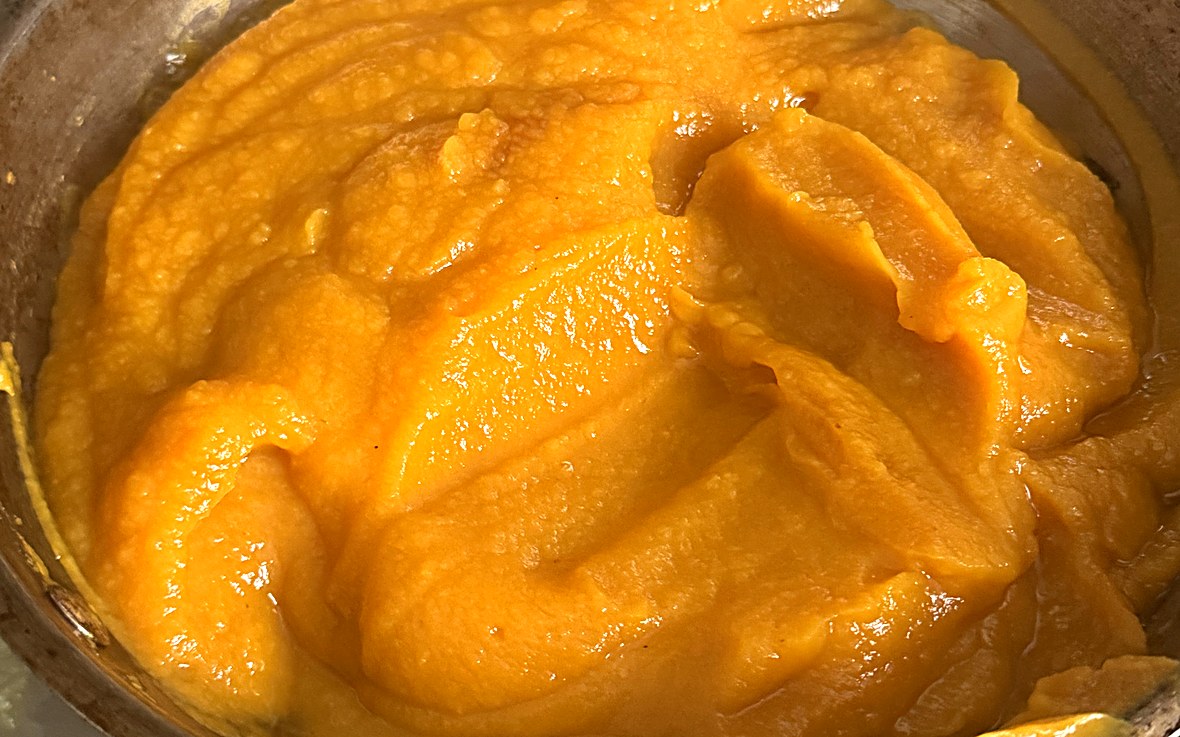
Why it burns in a gas oven
This is the part nobody warns you about.
A gas oven heats from a burner underneath. That means strong radiant heat coming up through the base of your tray, plus a fair amount of moisture from the flame itself. An electric fan oven moves hot air around and the heat arrives much more evenly.
So in a gas oven the tray gets far hotter than the air above it. The cubes sitting directly on the metal catch that heat first, their undersides scorch, and by the time the centre of each piece is soft the bottom has gone from caramelised to burnt. Cutting it small does not save you from this on its own. It just makes it happen faster, because there is more surface touching the tray.
The trick: wrap it in foil
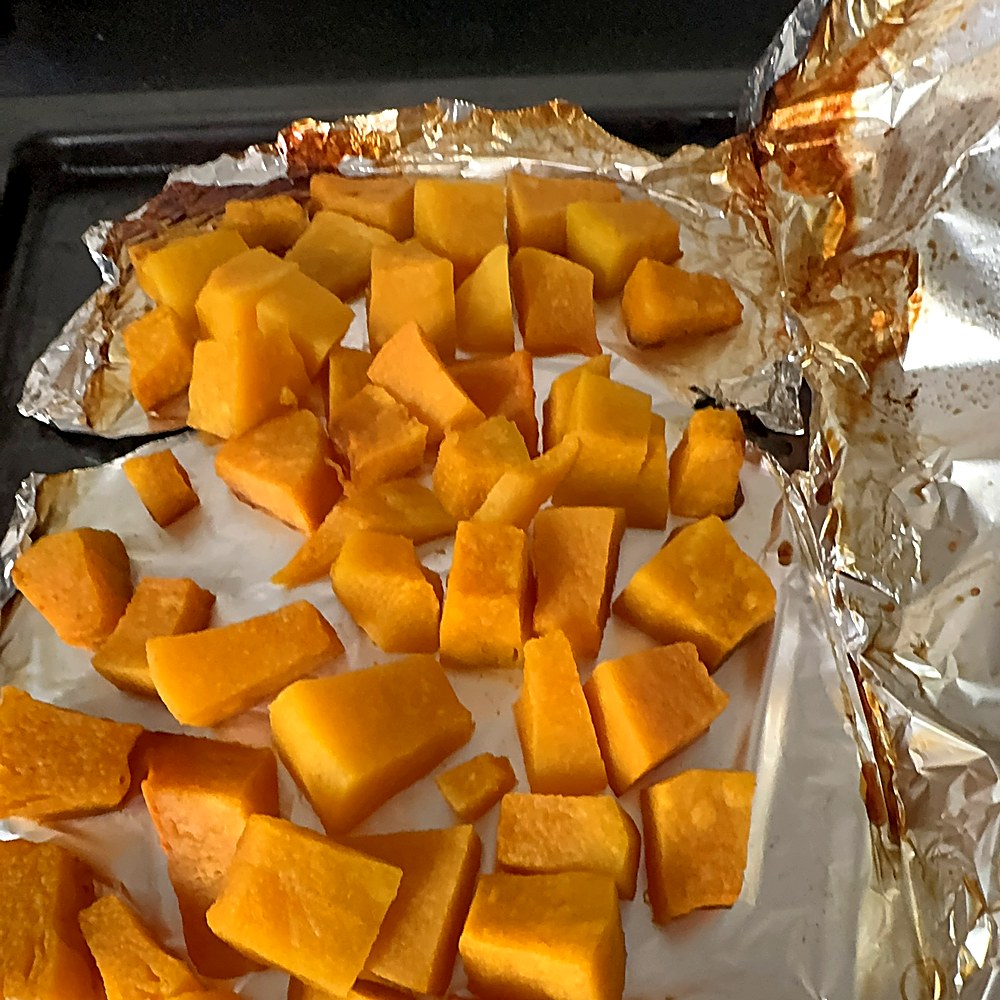
Fold the foil up and over the cubes and seal the edges, so the tray is a closed parcel rather than an open one.
Sealed like this, the pumpkin steams inside its own parcel instead of sitting exposed to the direct heat coming up through the metal. The burner underneath can only get at the outside of the foil, not the pumpkin itself, so nothing scorches while the inside works its way to soft.
Open the parcel for the last 10 to 15 minutes if you want the edges to catch some colour. Leave it sealed the whole time if you don't, and it will still come out right, just paler.
A few smaller things that help:
Middle shelf, not the bottom one. The lower you go in a gas oven, the closer you are to the flame.
A single layer, not a crowded pile. Crowded cubes trap steam unevenly against each other. Give them room inside the parcel.
A splash of water before you seal it. Two or three tablespoons. It turns to steam inside the parcel and keeps everything from drying out.
If your oven is electric and fan assisted, you can skip the foil. One tray, middle shelf, a stir halfway through, and it will be fine.
Peel it in wedges
Whole raw pumpkin is a fight against a peeler. Wedges are not.
Cut it into large wedges first, then run a sharp knife down each wedge to take the skin off in one or two strokes. It is faster and far safer than trying to peel or cube a whole round pumpkin on the board.
Aim for cubes of roughly the same size, about 2 to 3cm. Consistent matters more than precise. A large piece sitting next to a small one means one is still firm while the other has already caught too much colour.
How to tell when it is done
A fork into a cube, right through, with no resistance. The edges should look caramelised, a deep gold rather than pale, but not blackened.
Cube size decides the time more than anything else. Small dice can be ready in about 20 minutes, larger pieces can take 35, so start checking early and go by the fork rather than the clock.
Cooking off the water
Pumpkin holds a lot of water, and how much varies with the variety and how fresh it is.
If your puree looks loose, put it back in the pan you roasted or blended it in and set it over medium heat. Simmer it, stirring often, until the water has cooked off and it has thickened to the consistency you want. Ten to twenty minutes is usually enough. Stir more often as it thickens, because that is when it starts to catch on the bottom of the pan.
Once the water has simmered off, you have a beautiful homemade pumpkin puree, ready to use.
Tinned pumpkin is drained much harder than most homemade puree, which is why a recipe written for a tin can come out wet if you swap in your own without cooking off some of that water first.
Keeping it
In the fridge in a sealed jar for about five days.
In the freezer for about three months. Freeze it in the amounts you actually use rather than one big block, which means an ice cube tray or small tubs. Half a cup is a useful size.
Where to use it
In a pumpkin spice latte, in baking, in soup, stirred into yogurt, or as the base of anything you would otherwise open a tin for.
A spoonful with a little of my homemade pumpkin spice blend is the simplest thing you can do with it, and it is what I reach for most through autumn.
It really is this easy to make at home, and once you have a jar of it in the fridge, autumn tends to find a use for it.
The recipe
- Prep
- 15 minutes
- Bake
- 20 to 35 minutes
- Cool
- 20 minutes
- Serves
- About 2 to 3 cups
Ingredients
All of it
- 1 small pumpkin, about 1 to 1.5kg. A sugar pie pumpkin or any small dense variety
- A little water for the tray
Method
Prepare the pumpkin
- Heat the oven to 180°C (350°F).
- Cut the pumpkin into large wedges first. It is far easier to slice the skin off a wedge than to peel a whole round pumpkin.
- Peel each wedge with a sharp knife, then scoop out the seeds and the stringy middle.
- Cube the flesh into roughly 2 to 3cm pieces, as even as you can get them, so they all roast at the same rate.
Wrap it
- Line a rimmed baking tray with a large sheet of foil, leaving enough overhang on both sides to fold back over the top.
- Spread the cubes out in a single layer, without crowding them.
- Pour two or three tablespoons of water over the cubes, then fold the foil over the top and crimp the edges closed into a sealed parcel.
Roast it
- Roast on the middle shelf, sealed, for about 20 minutes.
- Fold the foil back to open the parcel, then roast for a further 10 to 15 minutes if you want the edges to catch some colour. Leave it sealed the whole time if you don't.
- It is done when a fork slides into a cube with no resistance.
Blend it
- Let it cool for about 20 minutes, until you can handle it.
- Tip the roasted cubes straight into a blender or food processor.
- Blend until completely smooth. Add a tablespoon of water only if the blender will not catch.
Cook off the water if you need to
- If the puree looks loose, tip it back into the pan and set it over medium heat.
- Simmer, stirring often, until the water has cooked off and it has thickened, about 10 to 20 minutes. Stir more as it thickens, since it starts to catch on the bottom near the end.
Thanks for reading.
More on PCOS, real food and faith, written from the middle of it.
One email a month. Unsubscribe any time.